

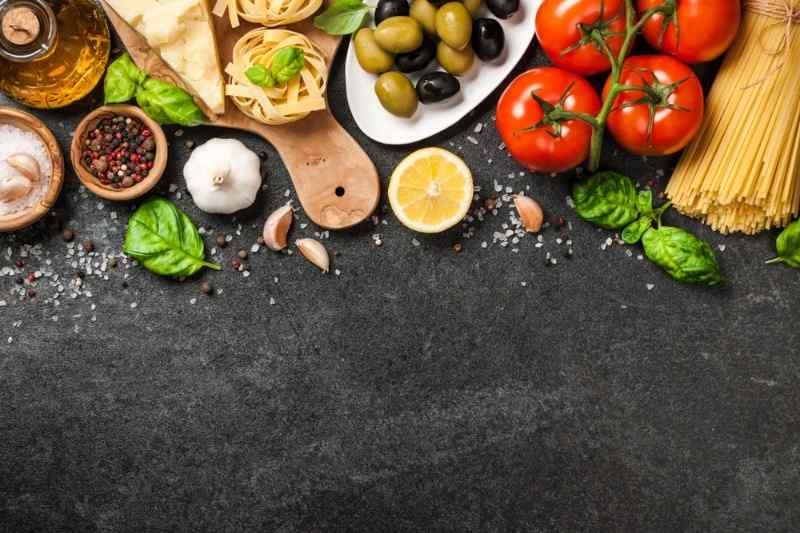
People everywhere love Italian food. It’s rich, bold, and somehow feels both simple and luxurious at the same time. The secret? Italians don’t fuss with fancy techniques or complicated recipes. They just start with really good Italian cooking ingredients—fresh veggies, heaps of herbs, golden olive oil, and grains that actually taste like something. That’s where all those unforgettable flavors come from.
Let’s dig into what makes Italian cooking tick. You’ll get a look at the Mediterranean staples Italy is famous for, the traditional Italian pantry items every Italian kitchen has, and how herbs and spices work together with the basics to give Italian food that unmistakable character.
Now, let’s find out some Italian cooking ingredients that define authentic Italian flavors, including olive oil in Italian cuisine, herbs, tomatoes, and other Mediterranean essentials.
Extra virgin olive oil is the foundation of Italian food. No matter what dish you are preparing, whether you are frying, drizzling on a salad, tossing pasta, or adding finishing touches, this is what you will be using to cook. Olive oil has been trusted by Italians forever and will probably be passed down for centuries more!
Extra virgin olive oil is the cream of the crop. It’s pressed from fresh olives, smooth, and just a little bit fruity. Cooks splash it over veggies, pasta, bread—you name it. It brings out those deep, authentic Italian flavors everyone loves.
Honestly, olive oil is in almost every Italian pantry. It ties Italian food to the broader world of Mediterranean cooking, and without it, something’s just missing.
If olive oil is the heart, tomatoes are the soul. They turn up in everything—pasta sauces, soups, salads, and even on their own with a sprinkle of salt. Their sweetness and gentle tang pull other flavors together. In summer, nothing beats a good fresh tomato. But Italians also lean on canned tomatoes and tomato paste, so those tomato-rich dishes don’t have to wait for July.
Tomatoes love company, especially garlic, herbs, and olive oil. It's that deep and rich flavor that makes Italian food so popular, and with the sheer number of Italian recipes that contain tomatoes, it’s easy to see why.
Almost every single Italian recipe uses garlic and onion in its preparation. Most Italian cooks will begin cooking garlic and onion in olive oil to fill their kitchens with the aroma of garlic and onion and create the first layer of flavor for any dish to follow.
Garlic and onion also appear in pasta sauces, soups, veggie dishes, and nearly every other classic Italian meal. Garlic and onion also work together with herbs like basil and oregano to create the distinctive layered and balanced flavors we all associate with Italian cuisine.
Step into any Italian kitchen, and you’ll spot basil, oregano, rosemary, thyme, and parsley—these herbs are everywhere, and for good reason. They’re small but mighty. Toss a handful in with tomatoes and olive oil, maybe some veggies, and the whole kitchen fills with that unmistakable aroma. Italians love fresh herbs. Even the simplest dish feels brighter and more alive.
But hey, not everything in the kitchen is fresh all the time. Dried herbs are essential too. They’re always on standby, ready to step in when you need them. Whether you’re reaching for fresh or dried, these herbs are the backbone of classic Italian flavor. They’re what turn an ordinary tomato sauce into something that tastes as if it came straight from a cozy spot down a cobblestone street.
If anything says “Italy,” it’s pasta. Just flour and water, but somehow it’s magic. There’s a pasta shape for every sauce, every mood. Long noodles go with lighter sauces, while short pasta is built to grab onto hearty, chunky ones.
Most Italian kitchens have a stash of pasta for good reason—it lasts forever, and it saves dinner on those hectic nights. Mix it up with tomatoes, herbs, and olive oil, and you’ve got a meal people dream about. It’s simple food, but it never gets old.
Take away cheese and Italian food loses something special. Parmesan, mozzarella, ricotta, pecorino—each one does something special. Toss Parmesan on your pasta, let mozzarella bubble and stretch on pizza, and spread ricotta thick in lasagna. Cheese isn’t just an afterthought. It’s the reason so many Italian dishes feel so cozy and satisfying.
Pair it with tomatoes and fresh herbs, and you get pure comfort. Cheese isn’t just part of Italian food—it’s right at the center, giving all those classic dishes the flavor people crave.
There’s always space for vegetables in Italian meals—eggplant, zucchini, peppers, and artichokes. You find them in all sorts of regional recipes. Usually, they get a quick toss in a pan with garlic, olive oil, and a few herbs. The result? Dishes that are colorful and fresh, where every ingredient gets to shine.
Fresh veggies really are the soul of Mediterranean cooking. Combine them with the other Italian basics, and you get food that looks great, tastes amazing, and just feels like home.
Bread’s a daily thing in Italy. People dip it in olive oil, make sandwiches, or toast it and pile on veggies. And olives—those show up everywhere. In salads, in pasta, or just on their own.
Bread and olives are must-haves in the pantry. Adding crunch, richness, and added depth to everyday meals is achieved through the use of nuts, while olive oil provides richness to the dish and ties together all ingredients. The combination of crunchy nuts and rich olive oil creates that classic Mediterranean dish.
If you ask anyone who knows Italian food, they’ll tell you—it’s all about simplicity. Most recipes use just a few ingredients, but Italians pick each one with care. Fresh vegetables, olive oil, herbs, and grains—these show up in kitchens every day.
Italian cooks know that when you start with amazing Mediterranean ingredients, you don’t need tricks or heavy-handed seasoning. Let the flavors take the lead. That’s the secret behind why Italian food always feels so fresh and hits the spot.
Italian food is all about using fresh, simple ingredients. Start with good olive oil, ripe tomatoes, real cheese, and a handful of herbs, and you don’t have to overthink it. That’s the secret—why Italian food feels so comforting, so memorable.
These staple Mediterranean cooking components (used to create famous Italian cuisine) are the heart of Italy's culinary traditions. Stock your kitchen with these basics, and you’re already halfway to real Italian cooking at home. Mix things up, keep it simple, and those deep, authentic flavors will follow.
Olive oil, tomatoes, garlic, herbs, pasta, cheese, and fresh veggies—these are the essentials.
Olive oil does it all. It cooks, seasons, and finishes dishes. It brings out the best in every ingredient and sits at the heart of Mediterranean cooking.
Basil, oregano, rosemary, thyme, and parsley show up in just about every Italian kitchen.
Pasta, oil from olives, canned tomatoes, dried seasonings, and olives make the list complete. As long as you have those items in your pantry, you can create a variety of traditional Italian dishes.
This content was created by AI